
Households are likely to remain the primary net lenders to the economy in the coming decades.

Sitharaman exhorted the states to work together with the Centre, stating that while the Union government sets the direction of economic growth, it is for the states to ensure effective implementation on the ground.

'Investors looking at the next 6-12 months can be certain that the Fed will maintain its easing cycle, and we expect the overall environment to be conducive for fixed income investments for portfolio diversification.'

Chief Economic Advisor (CEA) V Anantha Nageswaran considers absolute poverty a more direct and pressing concern for India. He argues that inequality is a relative concept. Simultaneously, with formerly economically deprived sections joining the ranks of the middle class, policy attention needs to extend beyond 'roti, kapda, makaan' to keep the growth engine up and running.

'Nearly 10 million people will benefit from the increase in the rebate limit for those earning up to Rs 12 lakh.' 'We expect all that money will come back into the economy in either savings, consumption, or investments.'
Striking a different note from its peers, US brokerage Bank of America Securities has maintained that the Reserve Bank will leave rates unchanged next week, recognising growth-focused and capex-driven fiscal expansion, which though poses huge price pressure and interest rate risks later. The RBI's rate setting panel Monetary Policy Committee (MPC) will begin its deliberations next Monday and announce the policy moves on Wednesday (February 9) in the backdrop of a massive spike in bond yields post the Budget. Almost all major central banks are in the process of hiking rates to tame inflation.

The Union government could target a fiscal deficit of 5.8-6 per cent of nominal GDP for 2023-24, and it should continue its capital expenditure push and look to simplify the personal income tax regime, economists recommended Finance Minister Nirmala Sitharaman and her team during their pre-Budget interaction on Monday. Starting last week, Sitharaman had eight pre-Budget consultations this time. More than 110 invitees representing seven stakeholder groups participated in these meetings, the finance ministry said in a statement. The stakeholder groups included representatives and experts from agriculture and agro-processing industry; industry, infrastructure & climate change; financial sector and capital markets; services and trade; social sector; trade unions and labour organisations; and economists.

The government on May 17 formed a five-member committee.

Automobile retail sales in India declined 9 per cent year-on-year in September amid a massive buildup of passenger vehicle inventory due to sluggish demand, dealer's body FADA said on Monday, urging original equipment manufacturers to take corrective steps. The overall registrations declined to 17,23,330 units last month from 18,99,192 units in September 2023, as most of the categories including passenger vehicles and two-wheelers witnessed a year-on-year (Y-O-Y) drop.

Very gradual fiscal consolidation glide path with looser-than-expected fiscal policy; good quality spending mix and reasonable assumption on fiscal math; and focus on privatisation, asset monetisation and long-term funding for infrastructure investments, according to Morgan Stanley, are the three key themes from the Budget 2021.

Chief Economic Advisor V Anantha Nageswaran on Thursday said the economy is expected to grow at 6.5 per cent in the current fiscal notwithstanding deficient rains in August. India recorded economic growth of 7.8 per cent in the April-June quarter of 2023-24 against 13.1 per cent in the year-ago period. India's economy in Q1 grew at the fastest pace in a year, on the shoulders of a boost in capital expenditure both at central and state levels, along with stronger consumption demand, especially in rural areas, and improved performance in the services sector, he said.

Will help in reviving the economy and push investment.

Why did the political system in the country react to these two decisions of the Modi government in a diametrically opposite manner? asks A K Bhattacharya.
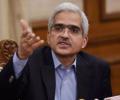
The Reserve Bank of India on Thursday decided to keep policy rate unchanged for third time in a row as it maintains heightened vigil on inflation. The rate increase cycle was paused in April after six consecutive rate hikes aggregating to 250 basis points since May 2022.

The government may roll out a new foreign trade policy (FTP) of a shorter term of two-three years in a bid to keep pace with the fast-evolving scenarios in international trade which have been triggered by recent disruptions, such as the pandemic and the Russia-Ukraine war. An FTP is an elaborate policy guideline and strategy to promote the export of goods and services, with a duration of five years usually. The existing policy came into force on April 1, 2015, and was valid for five years, before multiple extensions.

Few finance ministers announce any taxation measure that could upset the stock market. Ms Sitharaman decided to take that risk, observes A K Bhattacharya.

Government looking at cushioning slowdown due to demonetisation with sops and higher outlay for micro, small and medium enterprises, agriculture, and affordable housing.

The highlights of the RBI's fourth monetary policy review of fiscal year 2022-23 announced by Governor Shaktikanta Das.

The government has decided to postpone the release of the new Foreign Trade Policy (FTP) and extend the existing one by six months on account of global uncertainties and currency fluctuations. The government was scheduled to announce the new FTP by the end of September. The current policy was to end on September 30.
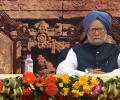
'He will be remembered more for what he did as finance minister -- as someone who functioned well when the political fallout was taken care of.'

The government will provide Rs 11.11 lakh crore for capital expenditure for 2024-25 and introduce viability gap funding to spur private investment in infrastructure, Finance Minister Nirmala Sitharaman said on Tuesday. Presenting the Union Budget for FY2024-25, she said that the government will endeavour to maintain strong fiscal support for infrastructure over the next five years, in conjunction with imperatives of other priorities and fiscal consolidation.

The additional outgo to combat the impact of COVID-19 will significantly erode the fiscal consolidation achieved by the state governments in the past three years, an RBI report said on Tuesday. In its study of the state budgets of 2020-21, the RBI report which has dwelled on the theme 'COVID-19 and its Spatial Dimensions in India', said that Gross Fiscal Deficit (GFD) of the states would spiral during the current fiscal.

'The Budget needs to focus more on social welfare schemes.'

Moody's assigns a 'Baa3' rating on India, with a stable outlook.

The government may be staring at a modest slippage in fiscal deficit for 2022-23 (FY23), with the Ministry of Finance seeking parliamentary approval for additional spending through a second and final tranche of supplementary demands for grants. On Monday, as the Budget session of Parliament resumed, Finance Minister Nirmala Sitharaman sought Parliament approval for additional gross spending of Rs 2.7 trillion in FY23 (which ends on March 31). While net cash outgo is pegged at Rs 1.48 trillion, the rest will be matched by savings or enhanced receipts, the finance ministry said.

The recent stimulus measures announced by China have seen most analysts sit up and take notice.

In the e2W category, which accounts for more than 60 per cent of total EV sales, volumes fell 15 per cent to 118,944 units in November, compared to 139,787 units in the previous month

With Donald Trump all set to become US president, Indian exporters may face high customs duties for goods like automobiles, textiles and pharmaceuticals if the new US administration decides to pursue the 'America First' agenda, opined trade experts. Experts also said that Trump could also tighten H-1B visa rules, impacting costs and growth for Indian IT firms. Over 80 per cent of India's IT export earnings come from the US, making it vulnerable to changes in visa policies.

'We face the risk of remaining a low-income country for a very long time unless something changes in the next few years.' 'Instead of constantly talking about becoming a developed economy, we need to start fixing the problems of the economy one by one.' 'There is so much potential, and we are squandering away the opportunity.'

The Indian rupee is likely to depreciate further against the US dollar through the end of 2024. This is due to the continued strengthening of the greenback, combined with the weakening of the Chinese yuan, which is expected to keep pressure on the Indian currency.

Making a case for an optimal fiscal stance, the Economic Survey on Friday said growth leads to debt sustainability and not necessarily vice-versa. "This is because debt sustainability depends on the 'Interest Rate Growth Rate Differential' (IRGD) i.e. the difference between the interest rate and the growth rate in an economy. "With the Indian context of potential high growth, the interest rate on debt paid by the Indian government has been less than India's growth rate by norm, not by exception," it said.

India added nearly 4.7 crore jobs during 2023-24, taking the total number of employed people to 64.33 crore spread over 27 sectors covering the entire economy, according to Reserve Bank data. The number of employed people was 59.67 crore at the end of March 2023, said the RBI's update on 'Measuring Productivity at the Industry Level-The India KLEMS [Capital (K), Labour (L), Energy (E), Material (M) and Services (S)] Database'.

'Not paying workers enough will end up being self-destructive or harmful for the corporate sector itself.'

Fitch Ratings on Tuesday raised India's growth forecast for the current fiscal to 7.2 per cent, from 7 per cent projected in March, saying elevated consumer confidence will drive spending, besides increased investments. In June update to its global economic outlook report, Fitch said it expects inflation to decline to 4.5 per cent by end of this year and RBI to cut policy interest rates by 25 basis points to 6.25 per cent.

From the 30 Sensex firms, Tata Steel, JSW Steel, Power Grid, HDFC Bank, Tata Motors and Larsen & Toubro were the biggest gainers. Hindustan Unilever, Infosys, Bajaj Finance, Axis Bank, Kotak Mahindra Bank and UltraTech Cement were among the laggards.

In a year bookended by intractable conflicts and geopolitical fragmentation, India focused on ramping up military prowess by broadly firming up defence procurement worth Rs 4.22 lakh crore even as Indian and Chinese militaries completed pulling back their troops from border face-off points in eastern Ladakh.
The government on Friday came out with Foreign Trade Policy (FTP) 2023 which seeks to boost the country's exports to $2 trillion by 2030 by shifting from incentives to remission and entitlement based regime. Unlike the practice of announcing 5-year FTP, the latest policy has no end date and will be updated as and when needed, said Director General of Foreign Trade (DGFT) Santosh Sarangi while briefing media about FTP 2023. Earlier, Commerce and Industry Minister Piyush Goyal unveiled FTP 2023 which will come into effect from April 1, 2023.
The Reserve Bank is unlikely to ease the benchmark policy rate during 2024 given the uncertainty over food inflation, State Bank of India (SBI) chairman C S Setty has said. The US Federal Reserve's first cut in interest rates in more than four years is expected soon, triggering central banks in other economies to follow suit. "On the rate front, a lot of central banks are taking independent calls.
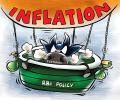
The Reserve Bank on Wednesday retained the retail inflation projection at 4.5 per cent for fiscal 2024-25, with Governor Shaktikanta Das stressing that the central bank will have to closely monitor the price situation and keep the "inflation horse" under tight leash lest it may bolt again. Unveiling the October bi-monthly monetary policy, the Governor also said the flexible inflation targeting (FIT) framework has completed 8 years since its introduction in 2016 and is a major structural reform of the 21st century in India.

From the Sensex pack, Adani Ports & Special Economic Zones, Mahindra & Mahindra, Reliance Industries, HDFC Bank, Larsen & Toubro, NTPC, State Bank of India, UltraTech Cement and Kotak Mahindra Bank were the major gainers. In contrast, Tata Steel, Titan, Bajaj Finserv, JSW Steel, Bajaj Finance, Hindustan Unilever, ITC, Tata Motors and Tata Consultancy Services were among the laggards.
